Overview of Environmental Air Quality Monitoring Systems

Huma-i has thought about the major concerns of the mothers
over and over, especially moms with young children, whose immune system is a
little bit weak. One of their concerns is, definitely, to bring up their kids
with safety and health.
However, the number of annual deaths by air pollution,
unfortunately, is increasing every year. According to WHO (World Health
Organization), the number of deaths by indoor air pollution exceeds the number
by outdoor air pollution. Now staying indoor is not safe anymore.
Huma-i let the moms to see the invisible murderer, air pollution,
by measuring air quality anytime and anywhere immediately. Huma-i will help mom
& baby, at least from the polluted air, to live in a safe and healthy
condition.
Where is the ideal fresh-air zone from the increasing
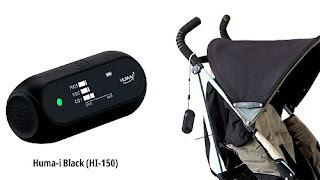
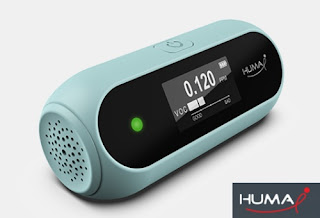
environmental pollution? Our product’s design began from this small question. Indoor Air Quality Monitoring
Device
Integrated Display Mode (PM2.5 / VOC / CO2) => WHO Mode
=> PM Mode (PM2.5 / PM10) => VOC Mode => CO2 Mode =>
Temperature/Humidity Mode
CO2:
Carbon dioxide is a colorless, tasteless gas that is heavier
than air and the gas itself shows little toxicity, but suffocation is possible.
If the amount of carbon dioxide is higher than the amount of oxygen circulating
in the brain, the respiratory disorder, headache, tinnitus, and blood pressure
will rise.
The areas for observing stations rely upon the motivation
behind the checking. Huma-i air quality observing systems are intended to help
human wellbeing targets, and checking stations are set up in populace focuses.
They might be close to occupied streets, in downtown areas, or at areas of
specific concern (e.g., a school, medical clinic, specific outflows sources).
Observing stations additionally might be set up to decide foundation contamination
levels, away from urban zones and outflows sources.
Review:
·
survey the degree of contamination;
·
give air contamination information to the
overall population in an auspicious way;
·
bolster execution of air quality objectives or
norms;
·
give data on air quality patterns;
·
give information to the assessment of air
quality models; and
·
bolster look into (e.g., long haul
investigations of the wellbeing impacts of air contamination).

Comments
Post a Comment